 Skip to content

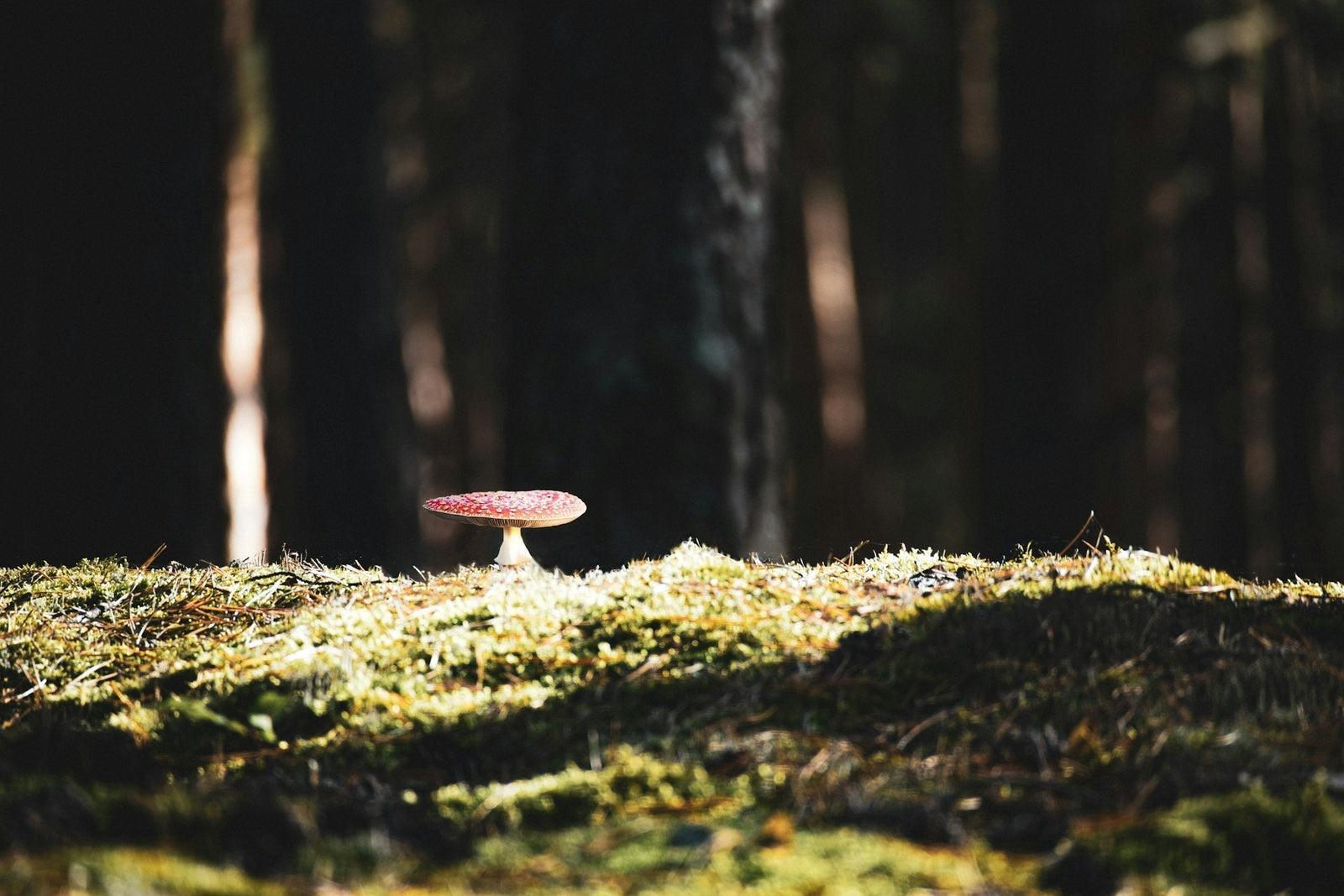
There's a slow, unglamorous process happening under your feet right now, and it has been happening more or less continuously for the last four hundred and seventy million years, and almost nothing on the surface of the planet would exist without it. The leaves drop. The branches fall. Animals die. Whole forests, whole generations of forests, lie down and become indistinguishable from the dirt. And then a long, patient, mostly invisible community of fungi, bacteria, worms, mites, and other organisms gets to work on the rot, and turns it, eventually, into the conditions for new life.
This is composting. We mostly know the word from the kitchen counter and the bin in the garden. But the actual process is the foundational engine of every ecosystem on Earth. The visible part, the green and the bloom and the canopy, is downstream of the invisible part. The flower exists because the floor of the forest, two feet below the flower, is doing the slow work of turning death into nutrition.
If you understand this about an ecosystem, you understand something useful about a body. And about an industry that has, for the last twenty years, been selling you the wrong half of the equation.
The Bloom Is Not the Story
Walk into any wellness aisle in any supermarket in the West and observe what is being sold. The marketing is almost entirely about the bloom. Glow. Radiance. Energy. Visible skin. Visible muscle. Visible calm. The promise is that if you take this product, ideally photographed in a clean white bottle on a kitchen counter that has nothing else on it, you will look better and feel better in a way that other people will notice.
The implicit theory is that wellness is a paint job. Apply the right product to the right surface and the surface improves. This is, when you say it out loud, an absurd theory. No gardener has ever made a flower bloom by painting the petals. No one has ever produced a healthy forest by spraying the canopy. And yet somehow, when the subject moves from soil to skin, we keep buying it.
The actual theory of how a flower works is unglamorous and slow. The flower is a downstream output of a long chain of upstream conditions. Soil composition, microbial activity, water availability, root health, sunlight, temperature, season, the absence of pests, the presence of fungal partners. None of those upstream conditions are photogenic. None of them produce a before-and-after Instagram post. They produce, eventually, a flower that nobody had to advertise.
The Same Thing, in a Body
You are also an ecosystem. The version of you that other people describe as "looking well" is the bloom. It is downstream of a system whose actual operations are invisible from the outside. Your gut microbiome. Your sleep architecture. Your cortisol curve through the day. The state of your liver. Whether your nervous system has been stuck in a low-grade alarm response for the last three months or has been allowed to settle. None of these are visible. All of them are the soil.
Radiance, that "glow," isn't something you paint on. It's what happens when the underground stuff is working.
When the underground stuff is working, the bloom takes care of itself. People say "you look great" and you don't quite know why. Your hair behaves. Your skin clears. You sleep through the night without thinking about it. You have the energy to be patient with the people you love. These are not separate goals to chase individually. They are the natural output of a system in rhythm.
When the underground stuff isn't working, no amount of surface intervention does much. You can apply the serum, take the photogenic powder, follow the routine, and still feel, accurately, that something is off. Because something is. The soil is depleted. The instrument is out of tune. And the bloom, no matter how much you push it, refuses to come.
Why the Industry Keeps Selling You the Bloom
There's a structural reason for this, and it's worth being clear-eyed about. The bloom is profitable. The soil is not.
The bloom can be photographed. The bloom can be sold in a bottle with a before-and-after. The bloom rewards short-cycle marketing because customers can be persuaded a product worked, or didn't, within a week or two of buying it. The soil works on the wrong timescale for any of that. The benefits of, say, sleeping properly for three months don't lend themselves to a thirty-second video. The benefits of fixing your gut microbiome don't show up on a face card. The marketing department wants the customer who's looking for a quick fix, because that customer comes back.
So the industry mostly sells the bloom. And mostly, the customer keeps not quite getting what they wanted, because the actual problem was always two layers down. Most people in this loop don't have a discipline problem. They have a level-of-analysis problem. They've been pointed at the wrong layer of the system for so long that they've forgotten there's a layer underneath.
What This Looks Like in Practice
The actually useful interventions, the ones that compound over time and that nobody photographs, tend to share a few features. They work on the underground layer rather than the surface. They take weeks or months to register, not days. They're often boring to talk about. And they tend to be pulled from traditions, herbal, dietary, behavioural, that have been refined over centuries, because that's the timescale on which soil-level interventions actually become legible.
Functional mushrooms are one example of this kind of intervention. They've been used in East Asian medicine for thousands of years specifically because their effects accumulate at the substrate level, on stress response, on immunity, on cognitive maintenance, in ways that don't show up the next morning but do show up six months in. Sleep is another. So is fibre. So is daylight. So is friendship. None of these are exciting product categories. All of them feed the soil.
The work, if you want to call it work, is to stop chasing the bloom and start feeding the soil. Most of the bloom you've been chasing was an output of soil work you weren't doing. The forest figured this out a long time ago. The leaf falls, the floor accepts it, the underground gets on with the slow alchemy of turning death into the conditions for life, and one day, without anyone needing to do anything dramatic, the flower arrives.
Our planet has been running this experiment for the better part of half a billion years. The results are in. They're worth taking seriously.


