 Skip to content

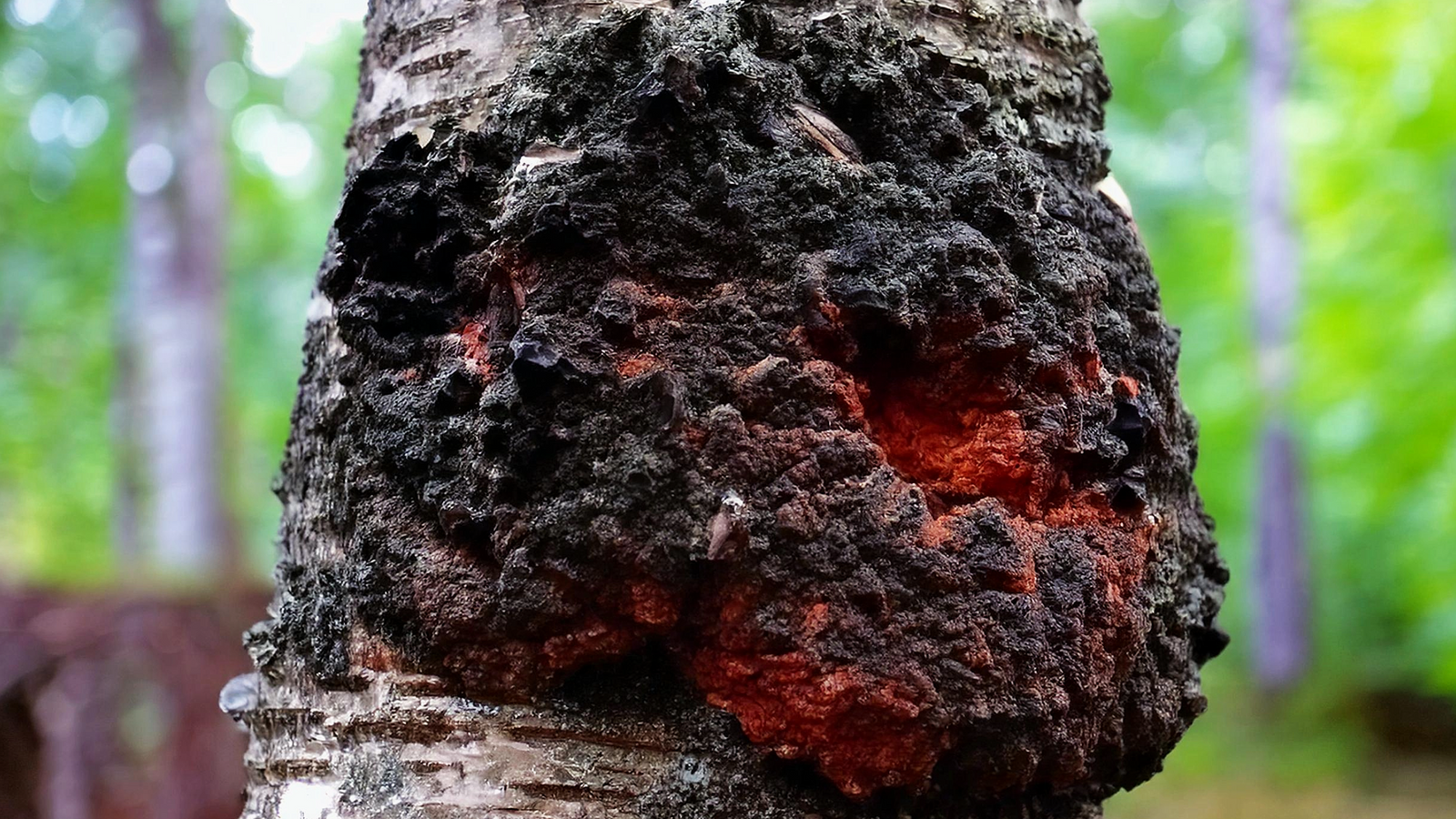
Around the year 1100, the Grand Prince of Kievan Rus developed a tumour on his lip.
Vladimir Monomakh was about as powerful as a person could be in the medieval world, which turned out to mean almost nothing here. His doctors had the best the era could offer. The best the era could offer did nothing. A growth like that, in those days, was the end of the conversation.
Then someone gave him a decoction made from a black, charred-looking lump that grows on the side of birch trees.
He recovered.
That part is in the chronicles of Kievan Rus. It still gets cited, in passing, in modern pharmacology papers, as the first written record of the fungus being used as medicine in Eastern Europe. The Slavs already had a name for the black lump. We call it chaga.
And it wasn't the last time it showed up.
The People Who Already Knew
Long before the prince, and long after him, the Khanty people of western Siberia were already using chaga. Not as a desperate last resort for royalty. As an everyday thing. For stomach trouble, for infections, as a general tonic you just drank.
They had never read the chronicles. They weren't following anyone's example. They had arrived at it on their own, the way every folk medicine gets built, by watching what happened over a very long time and passing it down. Their grandmothers knew. Their grandmothers' grandmothers knew. None of them could have told you why it worked. They just knew that it did, and that was enough to keep doing it for centuries.
By the 1800s, chaga had ended up in a strange place socially. It was peasant medicine and aristocrat medicine at the same time. Siberian farmers too poor for real tea crushed it and drank it every morning like coffee. The wealthy took it on purpose, as a remedy. Same fungus. Same tree. Completely different people, drinking it for completely different reasons, both convinced it was worth doing.
When It Became Official
For almost all of its history, chaga lived entirely in folk practice, which is usually where institutions stop paying attention. In the 1950s, Soviet researchers actually looked. They ran clinical studies. And in 1955, the Pharmacological Committee of the USSR Ministry of Health put chaga on the books as an official medicine.
So a black growth that village grandmothers had been brewing for an uncountable number of generations got handed to a national medical bureaucracy, and the bureaucracy's verdict was: yes, they were right. The grandmothers got there first. The institution just confirmed it, a few hundred years late.
But this was all still stuck behind the Iron Curtain. Outside the Soviet world, nobody had heard of any of it. What finally moved chaga across the world wasn't a clinical paper. It was a novel.
The Book That Carried It Out
In 1968, Aleksandr Solzhenitsyn published Cancer Ward, drawn from his own time as a cancer patient in Soviet Central Asia. Two years later he won the Nobel Prize in Literature. One thread in the book follows patients trying to track down a country doctor who treated people with a tea brewed from the birch fungus. The narrator talks about it the way you talk about something you half believe could save you: going off into the forest for months, breaking it off the tree, boiling it over a fire, getting well.
The book went where Soviet medical bulletins couldn't. A lot of Western readers met chaga for the first time inside a banned novel by a dissident who was about to become one of the most famous writers alive.
Nine hundred years. From a Siberian tribe, to a prince's chronicle, to peasant kitchens, to a state medicine register, to the rest of the world through a smuggled book. Since then there have been a lot of studies. The science is real and, like most things in this category, less finished than the marketing usually pretends. But the thing that made anyone run the studies in the first place was the nine hundred years.
The Same Ritual, Without the Campfire
Chaga is one of the mushrooms in our gummies. Not because it trended. Because of everything above.
The ritual itself hasn't really changed. People have been taking this every morning for a very long time. The only thing that's different now is that you no longer have to find the right birch tree, hack the lump off it, crumble it, and boil it down over a fire for hours to do it.
It's older than almost anything else you own. It just doesn't need the campfire anymore.


