 Skip to content

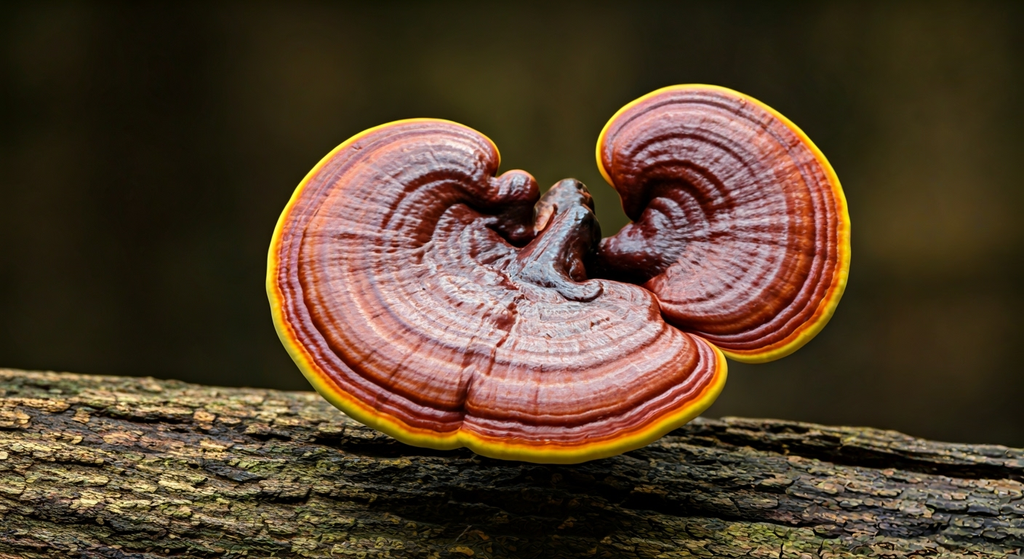
I went down a research rabbit hole on reishi recently, and within a few hours, something I thought I knew turned out to be fundamentally wrong.
Reishi is the stress-and-sleep mushroom. The one in the gummies. The one a yoga teacher once mentioned to you in passing, the one a wellness influencer was selling in powder form last month, the one that's now sitting next to ashwagandha and turmeric on shop shelves in every English-speaking country, with packaging designed to look earthy and trustworthy and just slightly exotic. Adaptogen. Functional mushroom. Plant-based wellness. The vocabulary is recent, friendly, and unmistakably commercial.
Then I started reading what people in China say about the same mushroom.
Where the Knowledge Actually Comes From
Reishi has been used in China for over two thousand years. Not as a wellness ingredient. Not as a supplement. As medicine. The Chinese name for it is língzhī, which translates roughly to "spirit mushroom," and it appears in the Shennong Bencao Jing, the foundational Chinese pharmacopoeia, sometime in the first or second century. It's listed in the highest classification, the category reserved for substances considered powerful enough to require careful, regulated use.
The Chinese government still treats it that way. Reishi is regulated. There are rules about how it's grown, how it's prepared, who can handle it commercially. It's prescribed inside actual medical traditions with two millennia of recorded observation behind them. The closest English-language equivalent isn't "supplement." It's something more like "drug," in the older sense of the word, before that word got narrow and pharmaceutical.
Now hold that next to how it's marketed in the West. Alternative. Experimental. Trending. A novelty. Something you might add to your morning coffee for a vibe.
The Strange Inversion
You can see what's happened here. A substance that has been treated with seriousness, regulation, and continuous documentation for two thousand years has, on its journey across the Pacific, been demoted to a fashionable accessory. The longest-running clinical observation of reishi in human history is, to the average Western consumer, invisible. The mushroom showed up in their feed eighteen months ago next to a smiling person in athleisure, and that's when it became real.
How we treat ancient wisdom like it's some trendy new thing we just discovered. How we question whether something works, when entire cultures have been using it as medicine since before we had words for the things it helps with.
This is not a small bias. It's a structural one. Western wellness culture is profoundly recency-weighted. If a study came out last week showing reishi helps with sleep, that study would carry more cultural authority than the two thousand years of practice that produced the question the study was investigating. The Western model rewards discovery. The Eastern model rewards continuity. They are not the same epistemology, and they don't translate cleanly.
What's interesting is that the modern science, when it does run the studies, mostly confirms what the older tradition already knew. Reishi contains compounds called triterpenoids and beta-glucans that influence the immune system and the stress response. Lab studies on lion's mane have identified compounds that support nerve growth factor synthesis. Cordyceps appears to influence cellular ATP production. None of this would surprise a Chinese medical practitioner from the eighth century. They would just say it differently.
What This Changed for Us
When we started Ankhway, this was the underlying intuition, even if we hadn't quite articulated it this clearly. Functional mushrooms aren't a new idea that needs to prove itself to a skeptical Western audience. They're an old idea that the Western audience is, slowly, finally catching up to. Our job isn't to convince anyone that the mushrooms work. The mushrooms have been working for two thousand years. Our job is to take them seriously enough to source them properly.
That means real fruiting bodies, not the cheap mycelium-on-grain product that dominates a surprising amount of the supplement market. It means lab testing for the actual active compounds, beta-glucans and triterpenoids, not just total polysaccharide content (which is a number you can game by leaving the grain in). It means no fillers, no proprietary blends, no marketing fog. The whole point is to honour the seriousness with which this knowledge was originally treated, rather than dilute it on the way through.
If something has been treated this seriously for this long, the least we can do is meet it halfway.
What's Worth Sitting With
Setting Ankhway aside, there's a more general thought worth keeping. The next time you encounter something in the wellness space, ask yourself what it would look like in a culture that had been using it for a thousand years. If the answer is "a casual additive in a morning smoothie," you're probably looking at it wrong. If the answer is "a regulated medical substance with specific protocols and centuries of clinical observation," you're probably closer to what the thing actually is.
The trendy framing is a marketing artefact. It's not how the substance has been understood for most of its history. The history is the more reliable signal.


